Why Logistics Businesses Need a Mobile App
The logistics sector operates in a fast-paced, highly dynamic environment where real-time information is critical. Mobile apps help logistics businesses bridge the gap between operations, drivers, warehouse staff, and customers. One of the main reasons logistics businesses need a mobile app is real-time visibility. Customers today expect live shipment tracking, accurate delivery timelines, and instant notifications. A logistics mobile app enables GPS tracking, automated status updates, and transparent communication, which significantly improves customer trust.
Operational efficiency is another key driver. Manual processes, spreadsheets, and phone-based coordination lead to delays and errors. Logistics apps automate order management, route planning, driver assignments, and proof of delivery, reducing human intervention and operational bottlenecks. Additionally, mobile apps help logistics companies scale their operations. As order volumes grow, managing deliveries without a digital system becomes increasingly complex. A scalable logistics app supports business growth by handling higher workloads without compromising service quality.
Types of Logistics Apps
Logistics apps are designed to solve specific operational challenges across transportation, warehousing, delivery, and supply chain management. Depending on the business model and operational needs, logistics companies can choose from several types of logistics mobile applications. Below are the most common and essential types of logistics apps used in the industry today.
1. Fleet Management Apps - Fleet management apps help logistics companies track and manage their vehicles in real time. These apps provide live GPS tracking, route optimization, fuel monitoring, driver performance analysis, and vehicle maintenance alerts. Fleet management apps are ideal for transportation companies and courier services looking to reduce fuel costs, improve delivery efficiency, and maintain better control over their fleet operations.
2. Warehouse Management Apps - Warehouse management apps focus on inventory control and warehouse operations. They help manage stock levels, inbound and outbound shipments, order picking, packing, and barcode scanning. These apps are widely used by logistics providers and eCommerce businesses to improve inventory accuracy, reduce manual errors, and speed up warehouse workflows.
3. Delivery Tracking Apps - Delivery tracking apps are customer-facing logistics applications that allow users to track shipments in real time. Features such as live location tracking, delivery status updates, estimated delivery time, and digital proof of delivery enhance transparency. These apps play a crucial role in last-mile delivery and help improve customer satisfaction by keeping users informed throughout the delivery journey.
4. Logistics Marketplace Apps - Logistics marketplace apps connect shippers with transport providers through a single digital platform. Businesses can post delivery requirements, and logistics providers can accept or bid on jobs. This type of logistics app improves flexibility, optimizes capacity utilization, and reduces transportation costs, making it popular among startups and on-demand logistics platforms.
5. Supply Chain Management Apps - Supply chain management apps provide end-to-end visibility into logistics operations. They integrate procurement, inventory, transportation, and distribution processes into one system. These apps help businesses optimize supply chain performance, improve demand forecasting, and reduce operational disruptions.
6. Freight Management Apps - Freight management apps are designed to manage freight booking, carrier selection, shipment documentation, and cost calculation. They are commonly used in domestic and international logistics operations. Such apps simplify freight coordination, improve compliance, and enhance shipment visibility across long-distance transportation.
Features of a Logistics CRM
A logistics CRM is more than a customer database, it acts as a central nervous system for sales, operations, and customer experience. Below is an in-depth explanation of the five most critical features that together cover the entire logistics lifecycle.
1. Customer & Order Management - Customer and order management is the foundation of any logistics CRM. This feature centralizes all customer-related data, including contact details, contracts, service preferences, shipment history, invoices, and communication logs. Instead of managing data across spreadsheets, emails, and multiple tools, logistics teams can access everything from a single dashboard. This helps sales teams understand customer value, operations teams manage ongoing shipments efficiently, and support teams resolve issues faster. A strong customer and order management system improves coordination between departments, reduces errors, and ensures consistent service delivery across all touchpoints.
2. Real-Time Shipment Tracking & Status Updates - Real-time shipment tracking is one of the most valuable features of a logistics CRM. It allows businesses to monitor shipments at every stage from pickup to final delivery using GPS and system integrations. This feature provides live status updates, estimated delivery times, delay alerts, and proof of delivery. Automated notifications keep customers informed without manual follow-ups, reducing inbound support queries. For logistics companies, real-time tracking improves accountability, enhances transparency, and builds long-term customer trust while helping teams proactively handle delays or route issues.
3. Sales, Quotes & Pricing Automation - Sales and pricing automation helps logistics businesses convert leads faster and manage revenue efficiently. A logistics CRM tracks the entire sales pipeline, from initial inquiry to deal closure, ensuring no opportunity is missed. This feature enables quick quote generation based on predefined pricing rules, fuel surcharges, distance, weight, and service type. Automated follow-ups and reminders help sales teams stay engaged with prospects and existing clients. By eliminating manual calculations and paperwork, pricing automation reduces errors, shortens sales cycles, and improves profitability.
4. Workflow Automation & System Integrations - Workflow automation streamlines daily logistics operations by reducing manual tasks. This feature automates order assignments, driver notifications, invoicing, document sharing, and approval processes. Integration with other logistics systems,such as fleet management, warehouse management, accounting software, and mobile delivery apps ensures smooth data flow across the organization. Information updates in real time, eliminating duplication and delays. Automation and integrations together improve operational speed, consistency, and scalability, especially as order volumes grow.
5. Analytics, Reports & Performance Dashboards - Analytics and reporting transform raw logistics data into actionable insights. A logistics CRM provides dashboards that track key metrics such as delivery performance, sales conversion rates, customer retention, revenue trends, and operational efficiency. Managers can use these insights to identify bottlenecks, optimize routes, improve pricing strategies, and enhance customer service. Custom reports help align decisions with business goals and market demand. Data-driven decision-making gives logistics companies a competitive advantage in a highly dynamic and cost-sensitive industry.
Step-by-Step Logistics App Development Process
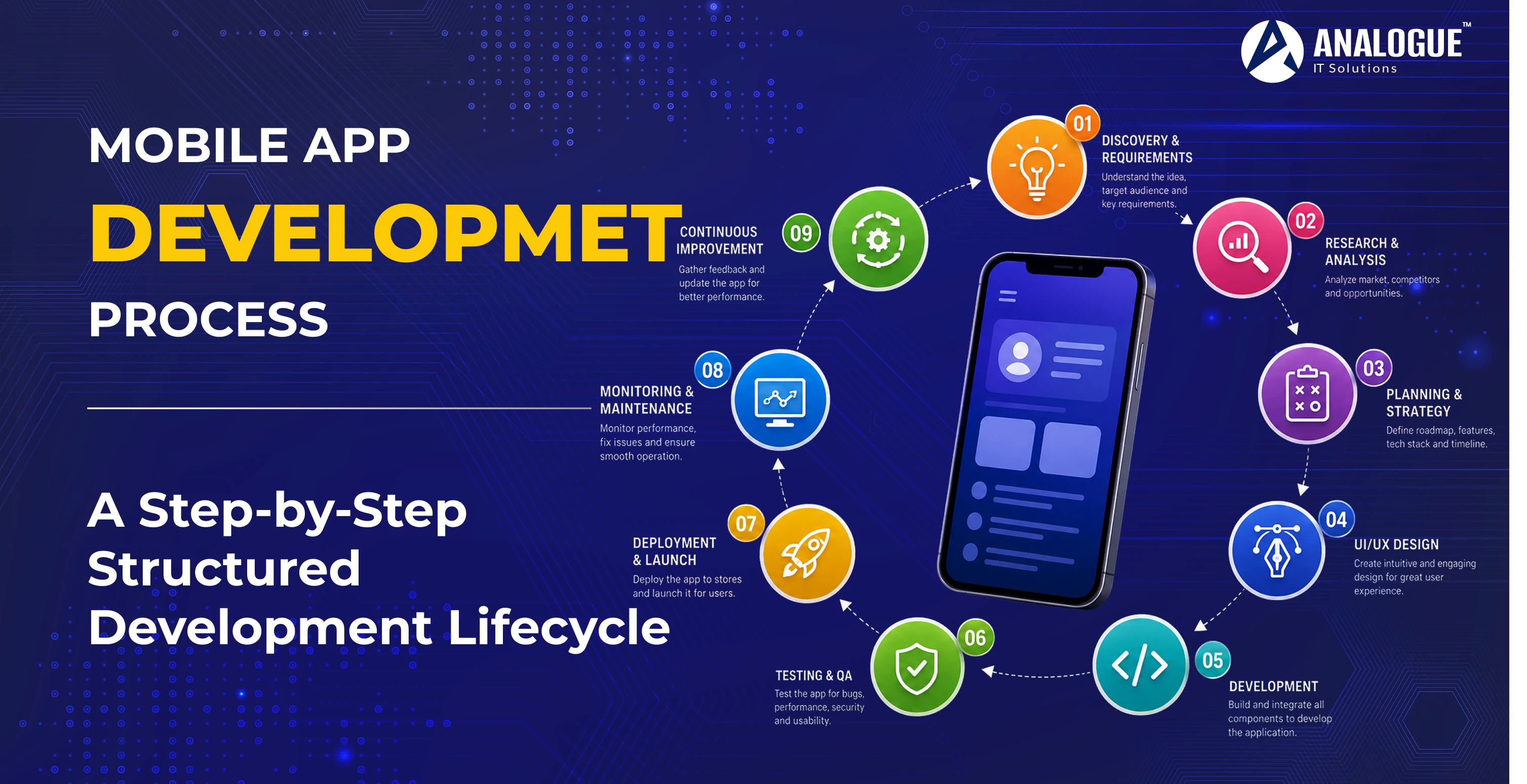
Building a successful logistics mobile app requires a structured, well-planned development approach. Below is a clear, practical, and industry-aligned logistics app development process that businesses follow to create scalable and high-performing solutions.
1. Business Analysis & Requirement Gathering - The first step in logistics app development is understanding your business model, target audience, and operational challenges. This phase focuses on identifying the type of logistics app you need: fleet management, delivery tracking, warehouse management, or a complete logistics ecosystem. Key activities include defining app objectives, user roles (admin, driver, customer), core features, and integration requirements. A strong requirement analysis helps avoid costly changes later in the development cycle.
2. Market Research & Feature Finalization - Market research helps you understand competitor apps, industry standards, and user expectations. During this stage, businesses analyze existing logistics apps to identify feature gaps and opportunities for innovation. Based on research insights, the final feature list is created, including real-time tracking, route optimization, notifications, analytics, and third-party integrations. Prioritizing features ensures faster development and better ROI.
3. UI/UX Design for Logistics App - User experience plays a major role in logistics mobile app success. Designers focus on creating an intuitive interface that allows drivers, managers, and customers to navigate the app easily. This step includes wireframing, prototyping, and visual design. The goal is to minimize user effort, improve accessibility, and ensure smooth workflows for logistics operations such as order tracking, delivery updates, and inventory management.
4. Backend & Frontend Development - This is the core development phase where the app is brought to life. The backend handles data processing, APIs, databases, real-time tracking, and third-party integrations. The frontend focuses on building responsive and user-friendly screens for different user roles. Modern logistics app development often uses scalable cloud infrastructure to handle real-time data, high traffic, and future growth without performance issues.
5. Integration of Advanced Technologies - To stay competitive, logistics apps integrate advanced technologies such as GPS tracking, AI-based route optimization, IoT sensors, and payment gateways. These integrations enhance real-time visibility, automation, and decision-making. Security measures such as data encryption, role-based access, and secure authentication are also implemented at this stage.
6. Testing & Quality Assurance - Testing ensures the logistics app works smoothly across devices and platforms. This step includes functional testing, performance testing, security testing, and usability testing. Quality assurance helps identify bugs, improve app stability, and ensure accurate real-time tracking and notifications. A well-tested logistics app reduces downtime and operational risks.
7. Deployment & App Launch - After successful testing, the logistics mobile app is deployed to the respective platforms such as Android, iOS, or web. App store compliance, server configuration, and live environment setup are handled during this phase. A controlled launch helps monitor performance, gather early feedback, and make quick improvements if needed.
8. Post-Launch Support & Continuous Improvement - Logistics app development does not end with deployment. Ongoing support, performance monitoring, bug fixes, and feature enhancements are essential for long-term success. Regular updates based on user feedback and market trends help keep the app relevant, secure, and scalable as business needs evolve.
Conclusion
As the logistics industry rapidly adopts digital technologies, mobile apps have become a core component of modern logistics operations. From improving fleet visibility and streamlining warehouse processes to enabling real-time delivery tracking and better customer communication, logistics apps help businesses operate more efficiently and reliably. Companies that invest in custom logistics app development gain better control over their operations, reduce costs, and enhance customer satisfaction. Choosing the right technology partner is equally important, as experience in building scalable and secure logistics solutions ensures long-term success. Providers like Analogue IT Solutions, with a strong understanding of logistics workflows and mobile technologies, support businesses in building future-ready logistics applications that can adapt to evolving market demands.



 For Business :