AI-Powered Mobile Apps Take the Lead
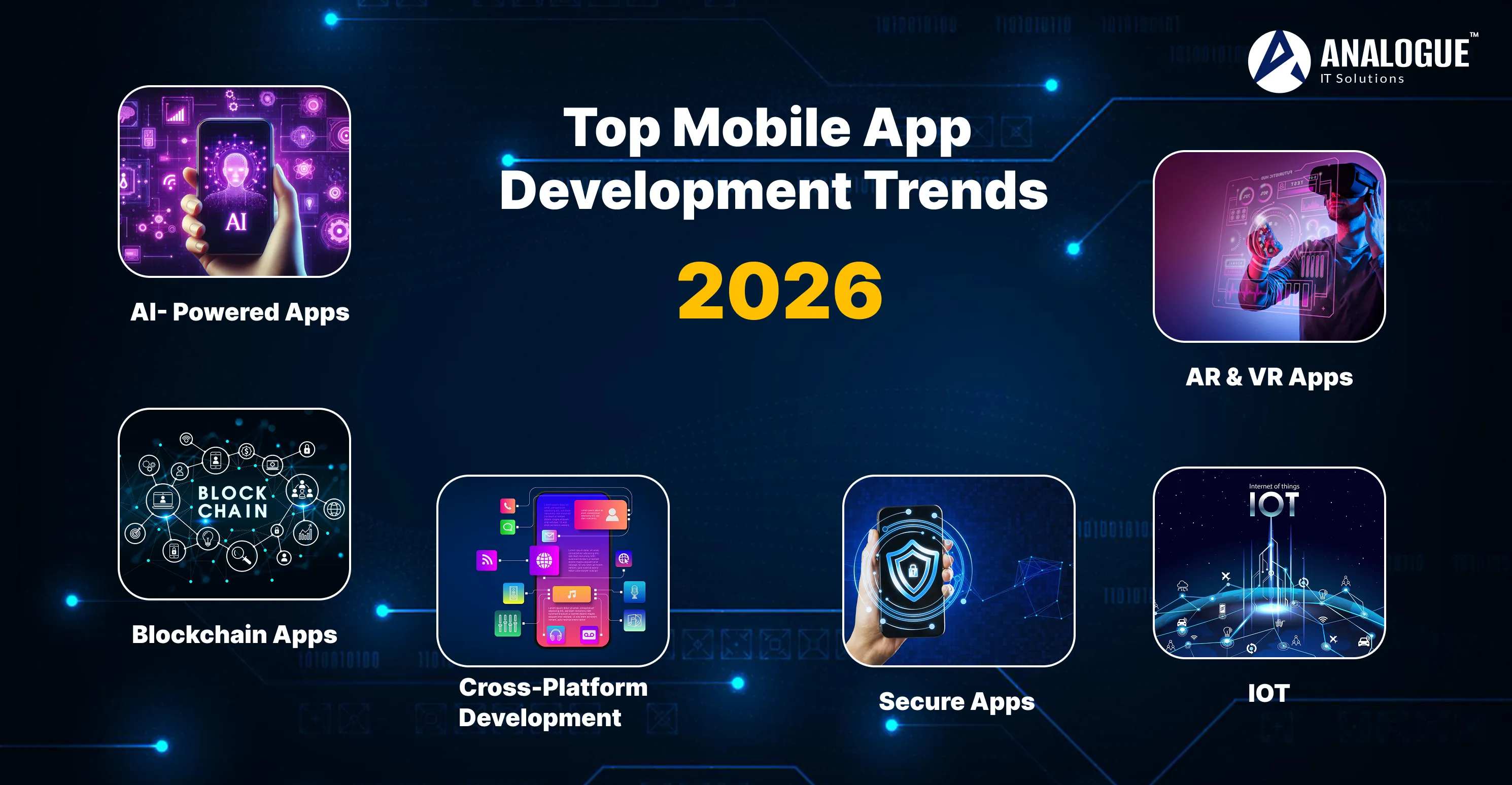
Artificial Intelligence is no longer just a feature it has become the core engine powering the future of mobile app development. In 2026, AI-powered mobile apps are expected to deliver hyper-personalized, predictive, and intelligent user experiences. From recommendation engines and chatbots to image recognition and automation, AI helps apps understand user behavior and respond intelligently. AI also improves business operations with features like predictive analytics, smart notifications, automated workflows, and voice assistance. Some growing AI use cases in mobile apps include:
● Personalized shopping and content suggestions
● AI-driven fitness and health monitoring
● Context-aware voice assistants
● Smart automation for businesses
● Fraud detection and secure mobile app development
With AI becoming more accessible and powerful, expect smarter, more intuitive apps that learn and evolve with every interaction.
5G Apps Enabling Real-Time, High-Speed Experiences
5G is accelerating the mobile app development trends revolution by providing ultra-fast internet speeds, low latency, and stronger connectivity. For developers, this opens the door to richer, more dynamic app experiences. Thanks to 5G, apps can now support:
● High-quality video streaming
● Real-time gaming and AR/VR
● Faster downloads and cloud connectivity
● More efficient IoT integration
● Improved performance and responsiveness
This means mobile app trends are shifting toward high-performance apps that work seamlessly without lag. Businesses leveraging 5G technology can deliver faster, smoother, and more immersive digital products giving them a competitive edge.
AR & VR Apps Redefining User Experience
Immersive technology is reshaping the digital world, and AR/VR is leading the transformation. With expanding hardware support and improved accessibility, augmented and virtual reality are enhancing multiple industries, including gaming, education, real estate, retail, healthcare, and training. Examples include:
● Virtual try-on features in shopping apps
● 3D product demos
● Virtual tours for real estate
● Interactive learning environments
● Immersive gaming experiences
These technologies are making mobile apps more interactive, engaging, and visually compelling and they’re rapidly becoming a core part of mobile app development trends 2026.
Security-First Mobile App Development Becomes Non-Negotiable
As mobile app usage continues to rise, security risks and cyber threats are also increasing. Data breaches, identity theft, and fraud have pushed businesses to prioritize secure mobile app development. In 2026, more apps will implement:
● Advanced encryption
● Multi-factor and biometric authentication
● Zero-trust architecture
● AI-driven threat monitoring
● Compliance-focused development
Security is no longer an optional feature, it is a core pillar of modern app architecture. Businesses investing in robust security measures build trust and protect user data, ensuring long-term success.
IoT and Connected Mobile Apps Growing Rapidly
Smart devices are everywhere, from smart home systems and wearables to connected vehicles and healthcare devices. This growth has boosted the demand for IoT-powered mobile apps that allow users to control and monitor devices in real time. IoT is transforming industries like:
● Healthcare
● Logistics
● Manufacturing
● Home automation
● Retail
With enhanced connectivity and 5G support, IoT integration has become one of the best technologies for mobile app development 2026.
Business Impact of Mobile App Trends in 2026 (Industry-Wise)
These mobile app trends are not just technological upgrades; they're reshaping industries and business models. Here’s how different sectors benefit:
Healthcare - AI-powered diagnosis, telemedicine, remote patient monitoring, and IoT-enabled devices are improving patient care while reducing operational costs.
E-Commerce & Retail - AR try-ons, AI-driven recommendations, and super apps are creating seamless and personalized shopping experiences boosting conversions and loyalty.
Banking & Fintech - Security-first development, biometric authentication, and AI fraud detection are improving security and trust while enabling smoother digital transactions.
Education - AR/VR learning environments, AI tutors, and remote learning platforms are making education more interactive and accessible worldwide.
Logistics & Transportation - IoT-enabled tracking, route optimization, and predictive analytics are helping companies streamline delivery operations and reduce costs.
Media & Entertainment - 5G streaming, cloud gaming, and immersive experiences are redefining content consumption and user engagement.
Real Estate - Virtual property tours and interactive visualization allow buyers to explore properties from anywhere speeding up the decision-making process.
Across industries, the business impact is clear, smarter apps mean better user experiences, stronger security, higher efficiency, and long-term growth.
Cost-Optimization Remains a Key Priority
Businesses are becoming more strategic about mobile app development cost in 2026. Instead of building everything from scratch, they now focus on:
● Modular designs
● Reusable components
● Cloud hosting
● Cross-platform development
● Scalable architecture
This approach ensures apps remain cost-efficient, powerful, and sustainable.
Final Thoughts
The future of mobile app development is innovative, intelligent, secure, and user-centric. Technologies like AI, 5G, AR/VR, and IoT along with security-first development practices are redefining what mobile apps can achieve. Businesses that embrace these mobile app development trends 2026 will be better positioned to deliver world-class digital experiences, attract customers, and grow sustainably. If you’re planning to invest in modern, secure, and high-performance mobile apps in 2026, this is the right time to begin. Analogue IT Solutions delivers end-to-end mobile app development services that help businesses innovate, scale, and grow in the digital era.



 For Business :