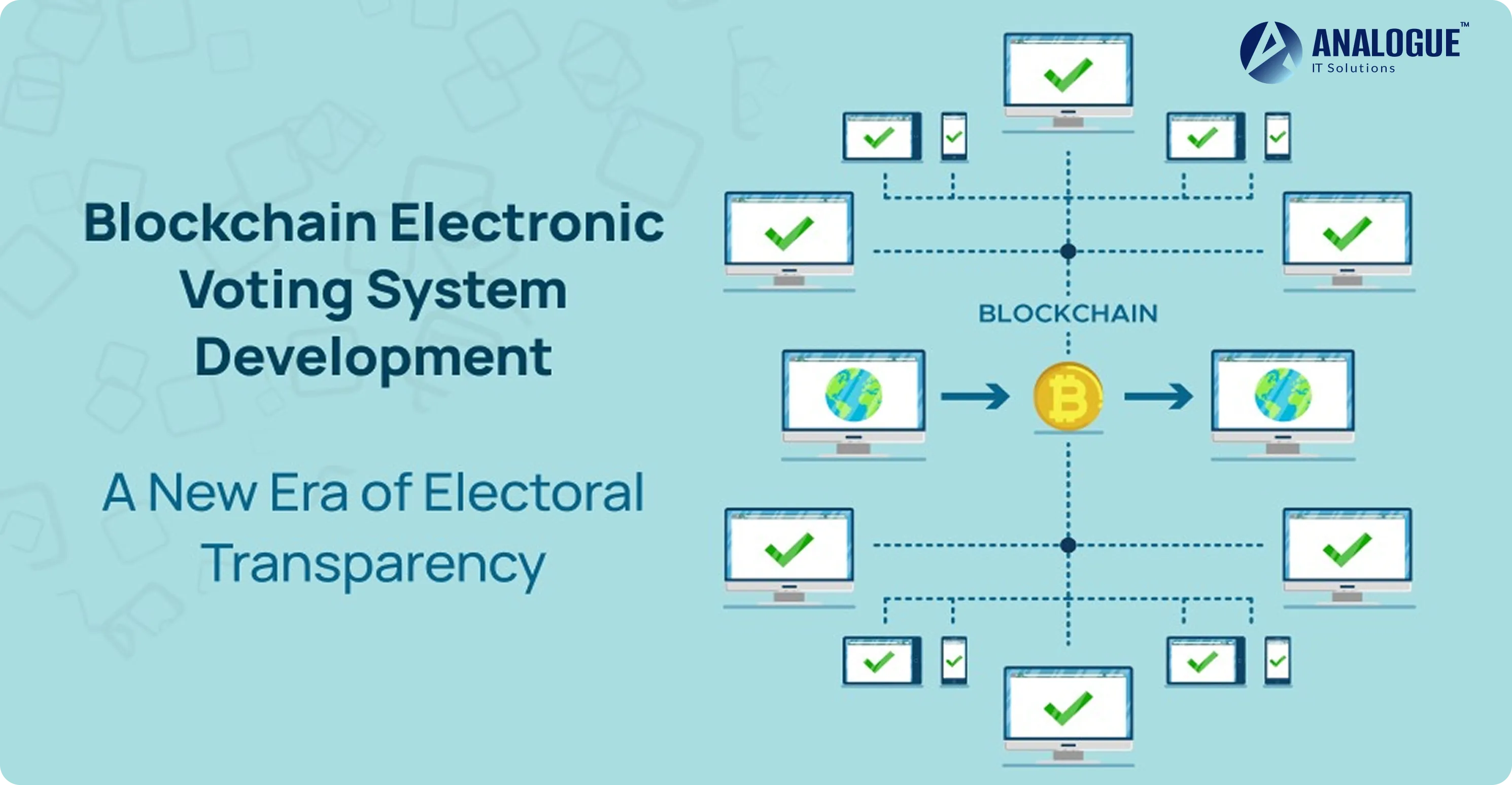
Blockchain‐Based Electronic Voting System: Significance
Implementing a blockchain-based voting system can revolutionize the democratic process. Here's why it's significant:
Security - Eliminates vote tampering and fraudulent voting.
Transparency - Ensures every transaction (vote) is verifiable without compromising anonymity.
Accessibility - Allows remote voting for overseas citizens and individuals with mobility challenges.
Cost-Effectiveness - Reduces manual labor and physical infrastructure costs.
Real-Time Results - Enables rapid and accurate vote tallying.
Blockchain technology thus offers a scalable and trustworthy platform to support democratic processes globally.
Benefits of Blockchain-Based Electronic Voting Systems
Here are the key advantages of switching to a blockchain-enabled voting solution:
Decentralization - Removes centralized control, making it difficult for any single entity to alter election outcomes.
Voter Anonymity - Uses cryptographic methods to hide voter identity while still allowing vote verification.
Transparency & Auditability - Publicly accessible blockchain allows anyone to verify election results without knowing who voted for whom.
Zero Human Error - Automated smart contracts reduce manual interventions and errors in vote casting and tallying.
Cost Reduction - Reduces costs by eliminating physical polling stations, paper ballots, and administrative overhead.
How to Develop a Blockchain-Based Electronic Voting System
Building a Blockchain-Based Electronic Voting System involves several technical and strategic steps. Let's explore the roadmap to its development.
1. Requirement Analysis
● Start with understanding electoral needs, legal compliances, user privacy expectations, and scalability concerns. Define objectives such as:
● Voter anonymity
● End-to-end encryption
● Real-time result reporting
● Fraud prevention
2. System Architecture Design
● Choose a blockchain type based on use-case:
Ethereum - Popular for smart contracts
Hyperledger Fabric - Enterprise-grade
Tezos or Quorum - For high-security needs
● Key components to design:
● Voter authentication modules
● Vote casting interface (mobile/web)
● Blockchain backend with smart contracts
● Admin dashboard for monitoring
● Result verification system
3. Tech Stack for Blockchain Electronic Voting System Development
Blockchain Platforms - Ethereum, Hyperledger Fabric, Tezos
Frontend - React, Angular, or Flutter
Backend - Node.js, Go, Python
Database - IPFS (for distributed storage) + optional traditional DBs
Security - SHA-256 encryption, Zero-Knowledge Proofs, Homomorphic Encryption
4. Development Stages
Smart Contract Development - Develop smart contracts to handle voter registration, vote casting, and tallying.
Voter Authentication - Use decentralized identity verification methods (DID), biometrics, or e-ID integrations.
Interface Creation - Design an intuitive multilingual voting interface with accessibility features (screen readers, audio support).
Vote Casting & Recording - Ensure votes are encrypted, anonymized, and stored in the blockchain with time stamps.
Vote Tallying - Smart contracts can automatically tally votes while preserving anonymity.
5. Testing & Validation
Unit Testing - For individual components
Integration Testing - For overall flow and interactions
Security Testing - Penetration testing and vulnerability scans
Load Testing - To assess scalability
UAT - Real-user feedback before going live
6. Deployment & Monitoring
● After thorough testing, deploy to a production environment with constant monitoring tools. Ensure compliance with electoral laws, data protection regulations (e.g., GDPR), and implement real-time security monitoring.
7. Future Maintenance
● Post-deployment, continuous updates are essential for:
● Bug fixing
● Feature enhancements (e.g., AI-based fraud detection)
● Integration with national identity systems
● Legal compliance updates
Challenges & Their Solutions in Blockchain Voting
Scalability
Issue - Processing millions of votes
Solution - Use hybrid or Layer 2 blockchains and sharding techniques
Cybersecurity Risks
Issue - Smart contract vulnerabilities
Solution - Use multi-party cryptography, regular audits, and secure coding
Voter Identification vs. Privacy
Issue - Balancing authentication with anonymity
Solution - Combine biometrics with Zero-Knowledge Proofs (ZKPs)
Digital Divide
Issue - Limited tech access for some voters
Solution - Multi-platform voting (mobile/web/kiosk) + digital literacy programs



 For Business :