1. User Interface & Experience
iPhone (iOS) - Apple's iOS is known for its clean, smooth, and user-friendly interface. The experience remains consistent across all devices, and there's minimal learning curve even for first-time users.
Android - Android provides more flexibility and personalization. Users can change launchers, widgets, and even system behaviors. While this is ideal for tech-savvy users, it can feel cluttered or inconsistent across different brands.
Verdict
● Choose iPhone if you prefer simplicity and consistency.
● Choose Android if you enjoy customization and control.
2. Hardware Variety and Price Range
iPhone (iOS) - Apple releases a limited number of models each year, and they are usually priced at a premium. In 2025, the latest iPhones come with advanced camera systems, powerful A-series chips, and top-tier build quality—but they don't come cheap.
Android - Android powers hundreds of phones from brands like Samsung, OnePlus, Google, Xiaomi, and Motorola. Whether your budget is ₹15,000 or ₹1,50,000, there's an Android phone for you.
Verdict
● Why choose Android over iPhone? Affordability and more options across every budget.
● Choose iPhone if you're ready to invest in a premium ecosystem with fewer but highly optimized models.
3. App Ecosystem and Updates
iPhone (iOS) - Apple leads in app quality. Developers usually launch apps first on iOS because of better monetization. Also, all iPhones receive software updates simultaneously even models up to 5-6 years old.
Android - App availability is vast, but quality can vary depending on the device. Android updates depend on the manufacturer Google Pixel receives instant updates, while others may delay.
Verdict
● Choose iPhone for consistent, long-term software support.
● Choose Android if you're using a Google Pixel or if frequent updates aren't a priority.
5. Privacy and Security
iPhone (iOS) - Apple is a clear leader in privacy. With features like app tracking transparency, Face ID encryption, and on-device processing, Apple markets privacy as a key value.
Android - Google has made improvements, especially in Android 14 and 15, but data collection remains part of its business model. Some manufacturers add extra security layers, but they're not as consistent.
Verdict
● Choose iPhone for stronger privacy protection.
● Android is improving but still trails behind in this area.
6. Integration with Other Devices
iPhone (iOS) - The Apple ecosystem shines here. Your iPhone works seamlessly with MacBook, iPad, Apple Watch, and even AirTags. Features like AirDrop, Handoff, and Universal Clipboard make multitasking a breeze.
Android - Google and Samsung are catching up with ecosystems of their own, integrating phones with Chromebooks, tablets, and smartwatches. However, cross-device functionality isn't as seamless as Apple's yet.
Verdict
● If you use other Apple devices, the iPhone is a no-brainer.
● Android works well if you're using Google Workspace or Samsung products.
7. Customization & Control
iPhone (iOS) - Limited in customization. You can change wallpapers, widgets, and some app icons, but system-level control is minimal.
Android - You can control nearly every aspect from how your notifications appear to installing third-party app stores and ROMs.
Verdict
● If you love freedom and flexibility, Android wins hands down.
● iPhone users enjoy a “just works” experience, even if it's less flexible.
8. Which One Is Used More - iPhone or Android?
As of 2025, Android holds about 70% of the global smartphone market share, while iPhones dominate in the U.S., Japan, and a few parts of Europe. So globally, Android is used more, mainly because of its availability across all price segments.
9. What Are the Disadvantages of Android Over iPhone?
Here are a few Android drawbacks when compared to iPhones:
● Inconsistent updates across different brands
● Lower resale value
● Fragmented user experience
● Weaker app security in some app stores
That said, Android also excels in areas where iPhones fall short like USB-C charging, expandable storage, and more open app ecosystems.
10. Should I Buy an iPhone or Android in 2025?
Here's a quick decision table:
| Preference | Best Choice |
|---|
| Budget-Friendly Options | Android |
| Long-Term Software Support | iPhone |
| Customization & Control | Android |
| Seamless Ecosystem | iPhone |
| Best Camera & Video | iPhone (Pro models) |
| Fast Charging/Battery Life | Android |
| Privacy & Security | iPhone |
Final Thoughts
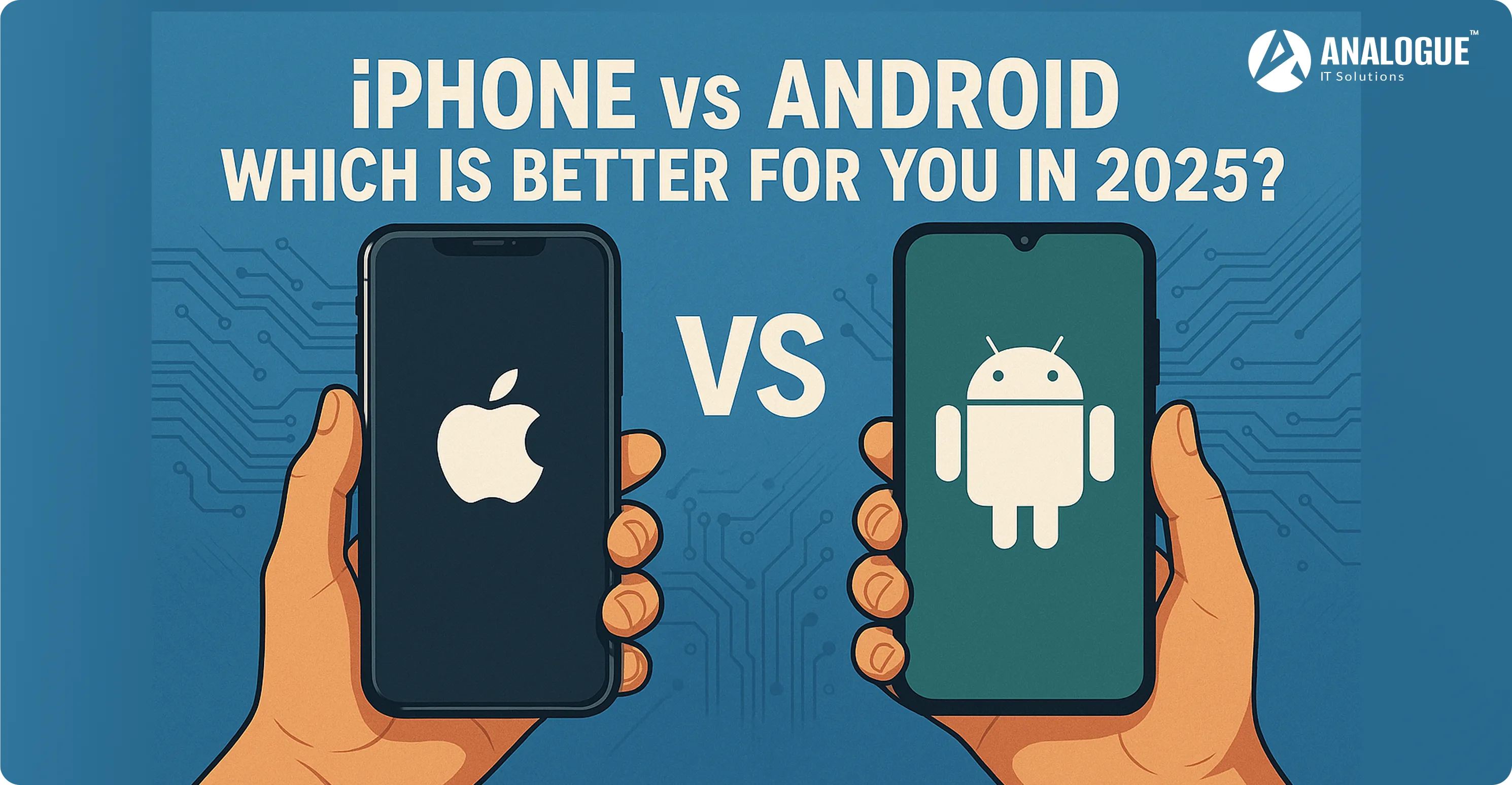
There is no universal winner in the Android vs iPhone battle,it all comes down to your needs. If you want more value, control, and variety, Android is the better pick. If you value consistency, security, and integration, the iPhone might suit you better.
Whichever you choose in 2025, both platforms have matured into reliable, powerful tools for work and play. Just make sure your choice aligns with your lifestyle not just trends.



 For Business :