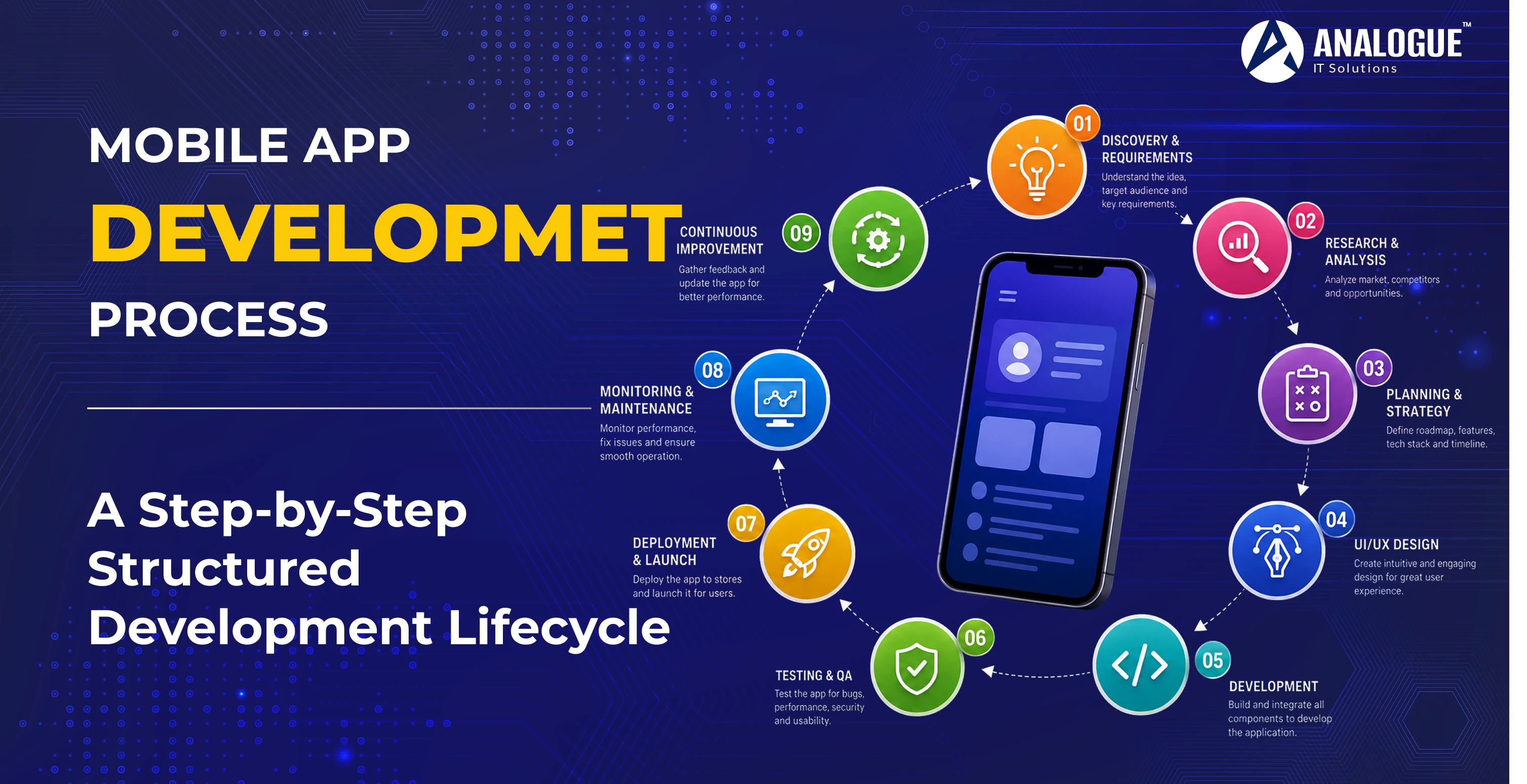
1. Idea Discovery and Requirement Analysis
The first stage of the mobile application development process is understanding the purpose of the app.
At this stage, the development team works with stakeholders to identify the problem the application will solve. Instead of immediately focusing on features or technology, businesses should first understand the target audience and their requirements.
Important questions include:
● What problem will the mobile app solve?
● Who are the target users?
● What features are essential for the first version?
● Which platforms will the app support?
● How will the application generate value for the business?
Requirement analysis also helps define the project scope. A clear scope prevents unnecessary features from being added during development, which can increase costs and delay the launch.
The output of this stage is usually a documented list of functional and non-functional requirements.
2. Market Research and Competitor Analysis
Before moving into design and development, businesses should understand the existing market.
Market research helps identify customer expectations, industry trends, competitor applications, and potential gaps in the market. This information can help businesses develop an application with a stronger value proposition.
Competitor analysis may include evaluating:
● Features offered by competing applications
● User ratings and reviews
● Common user complaints
● App design and navigation
● Pricing models
● Unique features and services
The goal is not to copy competitors. Instead, businesses should identify opportunities to create a better user experience or solve a problem that existing applications have not addressed effectively.
3. Mobile App Strategy and Project Planning
Once the idea and requirements are validated, the next stage is creating a structured project plan.
The development strategy defines how the application will be built and delivered. This includes selecting the right development approach.
Businesses may choose between:
Native App Development - Native applications are developed specifically for a particular operating system, such as Android or iOS. They can provide strong performance and access to device-specific features.
Cross-Platform App Development - Cross-platform development allows developers to create applications that work across multiple platforms using a shared codebase. Frameworks such as Flutter and React Native are commonly considered for this approach.
● Development timeline
● Project milestones
● Technology stack
● Development team structure
● Budget requirements
● Risk management strategy
A clear plan creates a strong foundation for the remaining stages of the mobile app development lifecycle.
4. UI/UX Design and Prototyping
One of the most crucial elements in the success of mobile applications is user experience. Even a feature-rich app may struggle if users find it confusing or difficult to navigate.
During the UI/UX design stage, designers create the visual and interaction framework of the application.
The process may include:
● User journey mapping
● Wireframing
● Information architecture
● UI design
● Interactive prototypes
Wireframes provide a basic representation of the application's screens and navigation. Once the structure is approved, designers create high-fidelity designs that include typography, visual elements, buttons, colours, and interactions.
Prototypes allow stakeholders and potential users to experience the app flow before development begins. Identifying usability problems at this stage can save significant time and development costs later.
5. Mobile App Development
After the design and technical requirements are finalized, the actual development stage begins.
Mobile app development typically includes two major areas:
Front-End Development - The front end is the part of the application users interact with directly. Developers build the screens, navigation, forms, animations, and other interactive components.
Back-End Development - The back end manages the application's business logic, databases, APIs, authentication, notifications, and server-side operations.
● Payment gateways
● Third-party APIs
● Location services
● Social media integrations
● Cloud storage
● Analytics platforms
● AI or machine learning capabilities
A structured development process often uses iterative development. Instead of waiting until the entire application is complete, features can be developed, reviewed, and improved in smaller stages.
6. Quality Assurance and Mobile App Testing
A crucial step in the creation of mobile apps is testing. The goal is to identify and resolve issues before users experience them.
A comprehensive testing process may include:
Functional Testing - This verifies whether every feature works according to the defined requirements.
Usability Testing - Usability testing evaluates whether users can easily understand and navigate the application.
Performance Testing - Performance testing checks how the app behaves under different levels of usage and system conditions.
Security Testing - Security testing helps identify vulnerabilities that could expose user or business data.
Device and Compatibility Testing - Mobile applications must often work across different screen sizes, operating system versions, and devices.
Thorough testing improves application reliability and helps create a smoother experience for users.
7. App Deployment and Launch
Once the application has successfully completed testing, it is prepared for deployment.
For most consumer applications, this involves publishing the app on platforms such as the Apple App Store and Google Play Store.
Before launch, the team should review:
● App store requirements
● App descriptions and screenshots
● Privacy policies
● Security requirements
● App permissions
● Analytics integration
Deployment is not simply the final step of development. The launch stage should also include monitoring tools that help businesses understand how users interact with the application.
8. Post-Launch Monitoring and Maintenance
Launching an application does not mean the development lifecycle has ended.
Mobile operating systems, user expectations, security requirements, and business needs continue to evolve. Therefore, ongoing maintenance is essential.
Post-launch activities may include:
● Monitoring app performance
● Fixing bugs
● Improving features
● Updating security
● Supporting new operating system versions
● Analyzing user feedback
● Adding new functionality
User reviews and analytics can provide valuable insights into how the application performs in real-world conditions.
A successful mobile application should continuously evolve based on user behaviour and business objectives.
Why a Structured Mobile App Development Lifecycle Matters
Following a structured mobile app development lifecycle helps businesses maintain better control over the project.
It can help:
● Reduce development risks
● Improve communication between teams
● Manage project timelines
● Control development costs
● Identify problems earlier
● Improve software quality
● Create a better user experience
Most importantly, a structured process ensures that development decisions are based on clear requirements rather than assumptions.
Conclusion
The Mobile app development process is a combination of strategy, research, design, development, testing, deployment, and continuous improvement. Each stage contributes to the overall quality and success of the final product.
Businesses that follow a step-by-step structured development lifecycle are better positioned to create applications that meet user expectations and support long-term business goals.
From validating the initial idea to maintaining the app after launch, a well-organized development process helps transform a concept into a reliable and scalable mobile solution.
Partnering with an experienced mobile app development team can further help businesses make the right technology decisions and navigate every stage of the development lifecycle effectively.



 For Business :