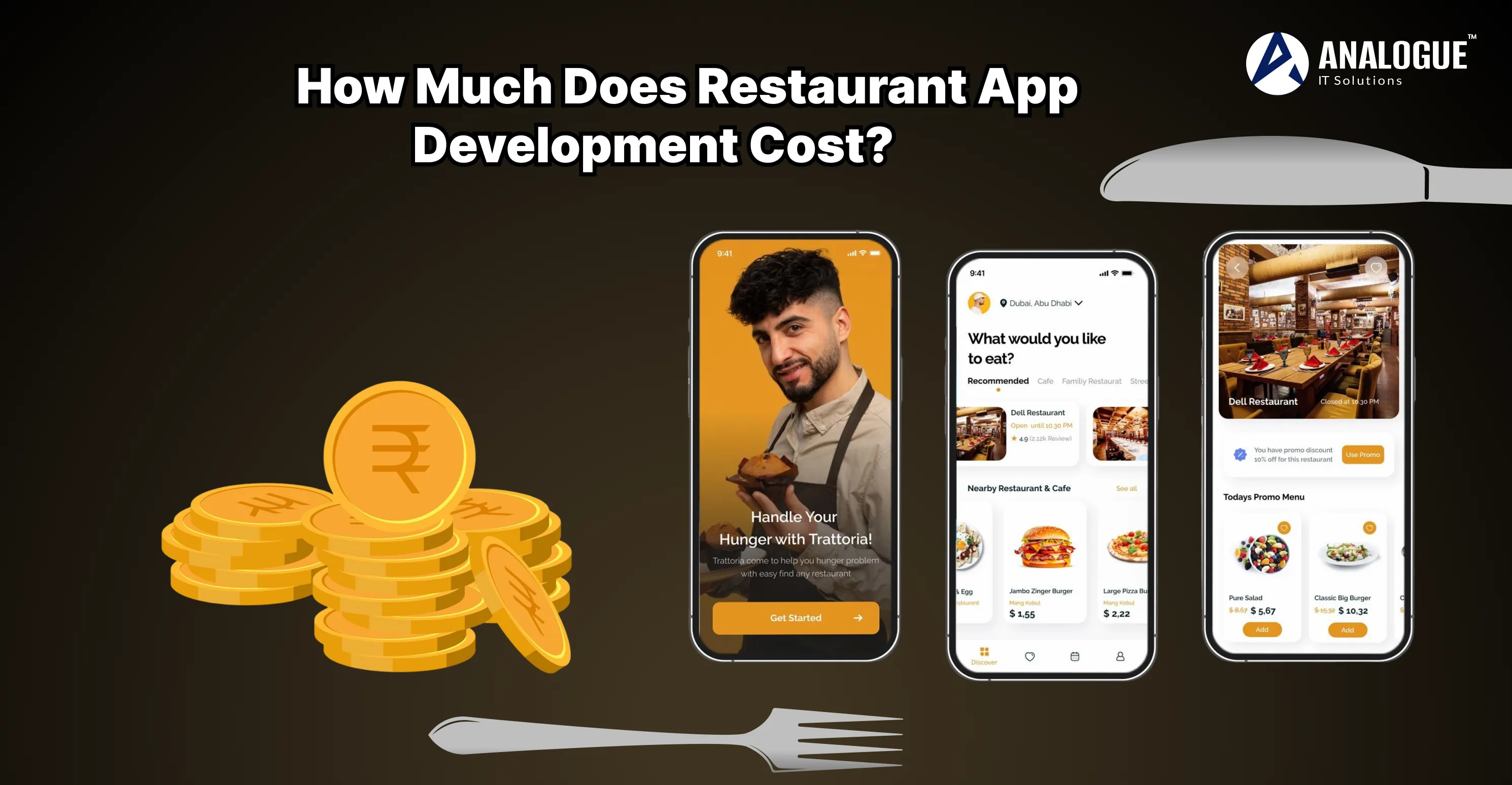
Understanding Restaurant App Development
A restaurant app is more than just a digital menu. Modern restaurant mobile applications are designed to enhance customer experience while improving backend efficiency. These apps typically include:
● Online food ordering and takeaway
● Table reservation and seat management
● Real-time order tracking
● Secure digital payments
● Customer reviews and ratings
● Loyalty programs and discount offers
● Push notifications and promotions
● POS and inventory integration
Depending on your business goals, a restaurant app can be developed for customers, restaurant staff, or both. Some businesses also invest in multi-vendor food delivery app development, similar to Swiggy or Zomato, which significantly increases development cost and complexity.
Key Factors That Influence Restaurant App Development Cost
1. App Type and Business Model - The type of restaurant app you choose directly affects the restaurant app development cost.
● Single restaurant app – Ideal for cafés and standalone restaurants
● Multi-branch restaurant app – Suitable for restaurant chains
● Multi-vendor food delivery app – Advanced platform with higher development cost
● Apps focused only on online ordering or table booking are more affordable than full-scale restaurant management solutions.
2. Features and Functionality - Features play the biggest role in determining the cost of custom restaurant app development.
Basic features include:
● Menu browsing
● Online ordering
● Secure payments
● Order history
Advanced features increase cost, such as:
● AI-powered food recommendations
● Real-time delivery tracking
● Loyalty and referral programs
● POS and inventory integration
● Analytics dashboards
● QR code menus and contactless ordering
3. Platform Choice (Android, iOS, or Both) - Developing an app for a single platform costs less than building for both Android and iOS. Many restaurants opt for cross-platform restaurant app development using Flutter or React Native to reduce cost while maintaining performance and reach.
4. UI/UX Design Complexity - A simple and intuitive design is crucial for user engagement. While basic UI designs are cost-effective, custom UI/UX designs, animations, and brand-specific visuals can increase development costs. However, a well-designed interface often leads to higher conversions and better user retention.
Core Features and Their Cost Impact
Customer App Features - A standard restaurant ordering app includes:
● User registration and login
● Digital menu display
● Cart and checkout
● Online payment gateway
● Order history
● Push notifications
● Ratings and reviews
● These features form the foundation of the app and keep development costs moderate.
Restaurant Admin Panel - An admin panel allows restaurant owners to:
● Manage menus and pricing
● Track orders and payments
● Control discounts and promotions
● Monitor analytics and performance
● Manage staff access
● This panel adds to development cost but is essential for operational efficiency.
Delivery & Real-Time Tracking
● Live order tracking, delivery partner integration, and GPS-based updates increase development complexity, especially for delivery-focused restaurant apps.
Loyalty Programs & Offers
● Features such as reward points, promo codes, referrals, and personalized offers improve customer retention but require additional backend logic and analytics integration.
Estimated Cost of Restaurant App Development
Basic Restaurant App - Includes menu display, ordering, payments, and admin panel $15,000 – $30,000
Mid-Level Restaurant App - Includes loyalty programs, push notifications, analytics, and integrations $30,000 – $60,000
Advanced Restaurant App - Includes AI features, POS integration, multi-location support, and scalability $60,000 – $120,000+
Technology Stack Used in Restaurant App Development
Frontend - Flutter, React Native, Swift, Kotlin
Backend - Node.js, Laravel, Django, Spring Boot
Database - MySQL, PostgreSQL, MongoDB
Third-party integrations - Payment gateways, Google Maps, SMS/Email APIs, analytics tools
● The technology stack directly impacts app performance, scalability, and long-term cost.
Timeline for Restaurant App Development
Basic app - 2–3 months
Mid-level app - 4–6 months
Advanced app - 6–9 months
Ongoing Costs After Development
Annual maintenance usually costs 15%–25% of the initial development cost.
● Server hosting and cloud services
● App maintenance and bug fixes
● Security updates
● Feature enhancements
● App store management
Restaurant app development requires continuous investment. Ongoing costs include:
How to Reduce Restaurant App Development Cost
● Choose cross-platform development
● Start with a Minimum Viable Product (MVP)
● Prioritize essential features first
● Use ready-made APIs
● Partner with an experienced restaurant app development company
Benefits of Investing in a Restaurant App
Over time, the return on investment often exceeds the initial development cost.
● Increase direct online orders
● Reduce third-party commission fees
● Improve customer loyalty
● Strengthen brand identity
● Streamline restaurant operations
A restaurant app helps:
Why Choose Analogue IT Solutions?
Analogue IT Solutions delivers custom, scalable, and secure restaurant app development solutions tailored to your business needs. From strategy and UI/UX design to development and post-launch support, we focus on performance, user experience, and future-ready technology to help restaurants grow digitally.



 For Business :