Understanding the Basics: What Is a Website?
A website is a collection of static or dynamic web pages that provide information. Think of a website as a digital brochure that people can visit to learn about your business, services, or products.
Common Features of a Website:
● Informational content
● About Us, Contact, Services pages
● Minimal user interaction
● Easy navigation
● SEO-friendly content
Examples of websites: News portals, blogs, portfolio sites, company websites. Websites are usually simple, fast-loading, and designed mainly for consumption of information.
What Is a Web Application?
A web application, on the other hand, is interactive software that runs in a web browser. Mozilla Developer Network defines it as software that allows users to perform specific actions rather than just read or view information.
Common Features of a Web Application:
● User authentication (login/signup)
● Real-time interaction
● Personalized dashboards
● Data processing and management
● Complex backend systems
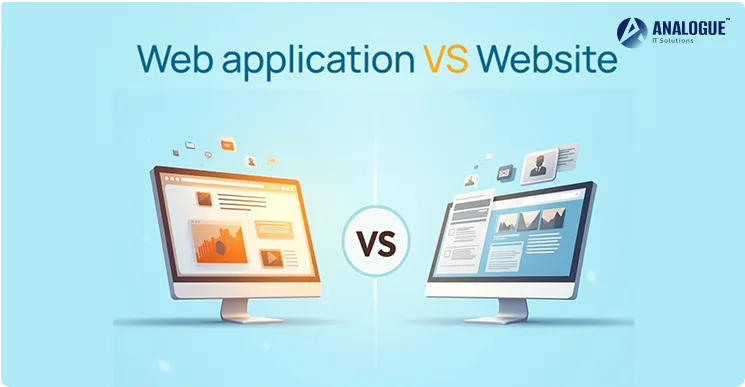
Examples of web apps: Gmail, Google Docs, Facebook, online banking platforms. When comparing a web application vs website, the key distinction is how users interact with the system.
Web App vs Website - A Side-by-Side Comparison
Let's break it down in a simple table format:
| Feature | Website | Web Application |
|---|
| Purpose | To inform and display content | To interact and perform tasks |
| User Interaction | Limited (clicking, reading) | High (input, processing, feedback) |
| Authentication | Rarely required | Commonly required |
| Development Complexity | Simple | Complex |
| Integration | Minimal, company websites | Often integrates with APIs & databases |
| Accessibility | Accessible through browsers | Also browser-based but may mimic app-like experience |
So when it comes to web apps vs websites: what are the key differences?, interaction and functionality stand out the most.
Difference Between Website & Web Application
Still wondering why this matters? Let's look at it with real-life examples.
Imagine you own a bakery:
● A website would show your menu, location, and contact info.
● A web application would allow users to create accounts, place custom orders, track delivery, and give reviews.
That's the core difference between a website and a web application; one shares information, the other lets users take action.
Which One Do You Need - Web App or Website?
It depends on your goals.
Choose a Website if:
● You want to share business info online.
● You need a digital portfolio or blog.
● You have a limited budget and want a simple presence.
Choose a Web Application if:
● Your users need to login and interact.
● You need complex features like forms, file uploads, dashboards.
● You're building a SaaS product, internal tool, or eCommerce solution.
If you're still debating app vs website, think of it like this:
● Websites talk to the user.
● Web apps talk with the user.
Web Application vs Website - What Businesses Should Know
From a business point of view, your choice affects:
Cost - Web apps are more expensive to develop and maintain.
Time to Launch - Websites are faster and easier to get online.
User Engagement - Apps offer a more personalized experience.
Scalability - Web applications can grow with your needs but need robust backend support.
Understanding the web application vs website comparison will help you plan better, invest smarter, and serve your customers more effectively.
Technology Behind the Scenes
Both websites and web apps use similar technologies such as:
● HTML, CSS, JavaScript for front-end
● Web apps add on: React, Angular, Node.js, databases, etc.
The main technical difference lies in:
● Websites are often built using CMS platforms like WordPress or static site generators.
● Web apps use advanced programming, frameworks, and backend integration for logic-heavy tasks.
Security Considerations
● Websites require basic security, like SSL certificates.
● Web applications must handle user data securely, manage sessions, and defend against threats like SQL injection and XSS attacks.
So, security is much more critical when building a web app.
Final Thoughts: What Should You Choose in 2025?
Whether it's a web application vs website, the best choice depends on your business goals, budget, and user needs.
If you just want to be visible online, a website is great. But if you're building something interactive like an online booking system, eCommerce store, or dashboard, then a web application is the way to go.
Need Help Choosing the Right Option?
At Analogue IT Solutions, we help startups and businesses build the right digital tools. Whether you need a simple website or a feature-rich web application, our expert team delivers tailored solutions that scale as your business grows.



 For Business :